Single Board
1× Katori50% OFF advertised
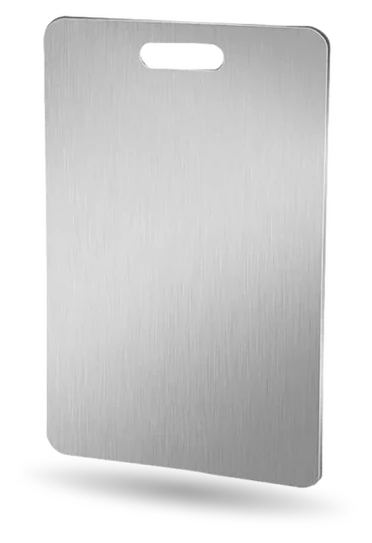
$59.00/ board
Seller's crossed-out amount: $118.00
Package total: $59.00
Check 1-Board OfferFinal currency, shipping and taxes: confirm at checkout.
A cutting board is one of the most-used tools in your kitchen, but it is also one of the easiest to overlook. From chopping vegetables for dinner to slicing fruit in the morning, you rely on the same surface every day. The Katori Titanium Cutting Board is designed to make that routine simpler with a smooth, non-porous cutting surface, double-sided design and easy-clean construction.
Unlike a board that needs regular oiling or leaves you scrubbing stubborn food marks, Katori is marketed as a low-maintenance alternative for everyday home cooking. Its titanium construction and resistance to moisture, odours and stains are central to its product positioning, while the compact design is intended to fit comfortably into an ordinary kitchen.
Material and safety claims are seller descriptions. Confirm the exact board specifications and checkout terms before purchasing.
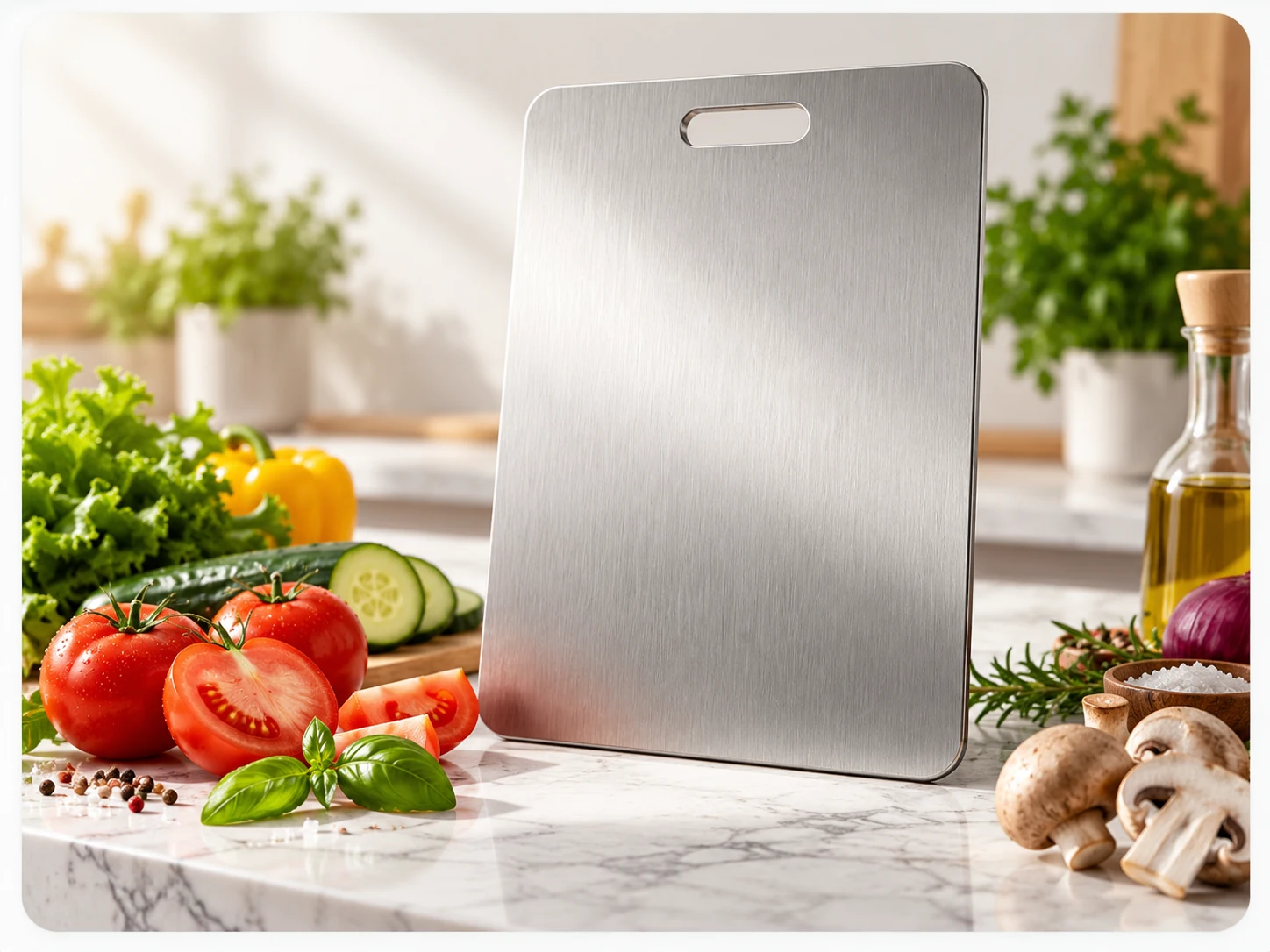
Whether you prepare meals for one person or a busy household, the appeal is straightforward: a practical place to chop ingredients, less complicated cleanup and a board you can use regularly without turning food preparation into another chore.
You finish chopping onions, wash your cutting board and still notice the smell when you take it out the next morning. After cutting beetroot or berries, a stain remains even though the board has been cleaned. Over time, repeated knife marks can make an older board look worn and harder to maintain.
These are not dramatic kitchen problems, but they become frustrating when the same board is used several times a day. A useful cutting board should offer enough preparation space, remain stable while chopping and be straightforward to clean between ingredients. It should also fit the way you actually cook.
Katori is marketed around those everyday concerns. Its smooth, non-porous surface is intended to resist absorbing food liquids and lingering odours, while its double-sided format gives home cooks more flexibility during meal preparation. Those practical features are a more useful reason to consider the product than exaggerated claims that every traditional board is unsafe.
A cutting board should make cooking easier, not give you another difficult cleaning job after dinner.
Seller's crossed-out amount: $118.00
Package total: $59.00
Check 1-Board OfferFinal currency, shipping and taxes: confirm at checkout.
Seller's crossed-out amount: $249.95
Package total: $99.98
Check 2-Board OfferFinal currency, shipping and taxes: confirm at checkout.
Seller's crossed-out amount: $393.86
Package total: $137.85
Check 3-Board OfferFinal currency, shipping and taxes: confirm at checkout.
Seller's crossed-out amount: $478.67
Package total: $143.60
Check 4-Board OfferFinal currency, shipping and taxes: confirm at checkout.
The accessible Katori sales pages advertise different regional offers, so buyers should not treat one website's promotional price as a universal price for every country or seller. The final amount may depend on currency, quantity, shipping destination and the package selected at checkout.
| Buying Option | What to Compare |
|---|---|
| Single Board | Total cost, shipping and product specifications |
| Two-Board Package | Actual cost per board and whether both are identical |
| Larger Package | Total upfront cost, quantity and genuine savings |
| Promotional Offer | Final checkout amount and applicable return terms |
A multi-board package may be useful if you want dedicated preparation surfaces for different foods or plan to give one as a gift. However, the lowest advertised price per board is not automatically the best purchase. The more important question is whether you genuinely need the quantity included.
Before paying, confirm the full checkout total rather than relying on a crossed-out retail price or large discount percentage. Check which company is handling the order and whether taxes, delivery charges or optional products have been added. A clear order summary is more useful than a countdown timer.
| Product Detail | Katori Titanium Cutting Board |
|---|---|
| Product Type | Reusable kitchen cutting board |
| Advertised Material | Pure titanium |
| Advertised Dimensions | Approximately 29 × 20 cm |
| Design | Double-sided cutting surface |
| Main Features | Non-porous, easy-clean and odour-resistant positioning |
| Intended Use | Everyday food preparation |
| Cleaning | Warm water, mild dish soap and thorough drying |
| Dishwasher Use | Check the exact seller's instructions |
| Current Price | Confirm at checkout |
| Return Policy | Confirm terms for the seller handling your order |
The accessible Katori sales pages describe the board as titanium and double-sided, with approximate dimensions of 29 × 20 cm. The specific titanium grade, independent material certification, product weight and dishwasher compatibility were not established by the reviewed product information.
The Katori Titanium Cutting Board is a reusable food-preparation board marketed as an alternative to conventional wooden, plastic and glass cutting boards. It is designed for daily chopping, slicing and ingredient preparation, with a metal surface that the seller describes as non-porous, resistant to odours and easy to wash after use.
Its double-sided construction is another advertised feature. Rather than providing only one working face, the board allows you to organise suitable preparation tasks across two surfaces. This can be convenient when preparing different ingredients, although both faces still require proper cleaning when there is a risk of cross-contamination.
The board's compact dimensions make it relevant to ordinary countertop use, particularly for someone who wants a reusable preparation surface without keeping a large chopping block permanently on display. Its practical suitability will depend on your kitchen space, preferred knives, the amount of food you prepare and how the board feels during use.
A non-porous cutting surface does not readily absorb liquids into the material itself. That is one reason metal boards can appeal to people who regularly work with ingredients that release juice, colour or strong aromas. With appropriate washing, a smooth surface can be convenient to maintain between everyday preparation tasks.
Think about chopping garlic before making dinner, cutting berries for breakfast or preparing several vegetables for a batch of lunches. You want to remove food residue and move on without worrying about maintaining a heavily stained or strongly scented board. Katori's advertised surface is designed around this everyday convenience.
There is an important distinction between a non-porous material and a bacteria-free cutting board. Food residue and microorganisms can still remain on a surface that has not been cleaned properly. The USDA advises washing cutting boards in hot, soapy water after use, rinsing them and allowing them to dry.
Katori's practical appeal is therefore its potentially easier cleaning experience—not a promise that the material removes the need for normal kitchen hygiene. A well-maintained board and sensible food-handling habits work together.
When you prepare several ingredients for one meal, cleaning convenience matters. Katori is marketed with a smooth surface that allows food residue to be washed away using warm water and mild dish soap. That makes it appealing to cooks who want a straightforward cleanup routine without the additional conditioning that some wooden cutting boards require.
Onions, garlic, fish and strongly flavoured ingredients can leave unwanted smells on some cutting surfaces. Katori's non-porous material is promoted as resistant to absorbing those odours. This may make it a practical choice for households that prepare a variety of foods, provided the board is still washed thoroughly after each appropriate use.
Katori's double-sided design gives you two working faces within one board. You can organise different preparation tasks without needing to turn every meal into a collection of separate kitchen accessories. Both sides must still be cleaned appropriately, particularly when switching between raw animal products and food that will be eaten without further cooking.
The seller positions titanium as a durable material that resists moisture-related damage and is suitable for repeated kitchen use. For buyers accustomed to boards that warp, split or develop deep marks, this is an appealing feature. Actual longevity will depend on the exact construction, surface finish, handling and care of the product received.
Some wooden boards need occasional oiling or other material-specific care. Katori is marketed as a lower-maintenance option that can be cleaned with ordinary dish soap and water. This may suit busy households that want a preparation board they can wash, dry and put away without adding another lengthy task to the kitchen routine.
A cutting board is often left on the countertop between meals, so appearance can matter alongside function. Katori's minimalist metal design offers a different look from traditional wooden or colourful plastic boards. For buyers who prefer a simple kitchen setup, its compact format and understated appearance may fit naturally into the space.
Choosing a cutting board involves more than comparing materials on paper. Think about the ingredients you prepare, the knives you own, how much countertop space you have and the amount of maintenance you are comfortable with. Each material has practical characteristics, and no cutting board removes the need for good food-handling habits.
| Cutting Board | Practical Advantages | Things to Consider |
|---|---|---|
| Katori Titanium | Advertised as non-porous, odour-resistant and easy to clean | Verify material and assess knife feel |
| Wooden Board | Traditional cutting feel and a wide choice of sizes | Requires material-appropriate cleaning and care |
| Plastic Board | Often lightweight and affordable | Worn surfaces may develop difficult-to-clean grooves |
| Glass Board | Non-porous and easy to wash | Its hard surface can be demanding on knife edges |
| Stainless Steel Board | Durable, non-porous metal construction | Cutting feel, noise and stability vary by design |
A wooden or plastic board is not automatically unhygienic. USDA guidance explains that different board materials can be used safely when they are properly cleaned and replaced after becoming excessively worn. The relevant question is which surface works well for your kitchen and whether you will maintain it correctly.
Katori's main distinction is its advertised combination of titanium construction, a compact double-sided format and low-maintenance cleaning. Those features may appeal to someone seeking an alternative to an existing board, but they do not establish that it outperforms every other material in every situation.
Knife care is one of the first questions to ask when considering a metal cutting board. The Katori sales pages describe the product as knife-friendly and position its surface as gentler on blades than glass or stone. However, the reviewed pages do not provide an independent comparative test of knife-edge wear.
A knife's performance depends on several factors, including blade steel, edge geometry, cutting technique, board finish and maintenance. It would therefore be misleading to promise that every knife will stay sharp for longer simply because it is used with Katori. Buyers who own expensive or specialised knives may want to assess the cutting feel before changing their usual preparation surface.
Pay attention to whether the board remains stable during chopping and whether your knife moves comfortably across it. A cutting surface should suit your technique rather than forcing you to change your grip or apply unnecessary pressure. If the seller offers independent blade-wear testing for the exact model, that would provide more useful evidence than a broad marketing claim.
The ability to use both faces of a cutting board can be convenient when preparing a meal with several ingredients. One face might be used for washed vegetables while another is reserved for a different task. This can help organise your workflow, particularly when you have limited counter space and prefer fewer accessories.
However, using the opposite side is not a substitute for proper cleaning. Raw meat juices can reach a board's edges, your hands, the knife or the countertop. For food safety, use separate boards for raw meat, poultry and seafood and for ready-to-eat foods whenever possible, and clean contaminated utensils and surfaces before continuing.
The most useful way to approach Katori's double-sided design is as an organisational feature. It gives you flexibility during preparation while allowing you to maintain a simple routine based on appropriate separation, washing and drying.
The accessible Katori product pages advertise approximate dimensions of 29 × 20 cm, or 11.4 × 7.9 inches. That places it in a relatively compact category, making it relevant to ordinary countertop tasks and kitchens where storage space is limited.
For many home cooks, a compact board is convenient for slicing fruit, preparing vegetables, chopping herbs or handling smaller ingredients. It can be easier to move between the counter and sink, and it may take up less space in a kitchen cupboard than a large chopping block.
The same size may be less convenient for someone preparing large quantities of food or handling bulky ingredients. If you regularly chop several large vegetables at once or prepare substantial cuts of meat, compare the dimensions with your current board before ordering. The right size is the one that gives you sufficient working room.
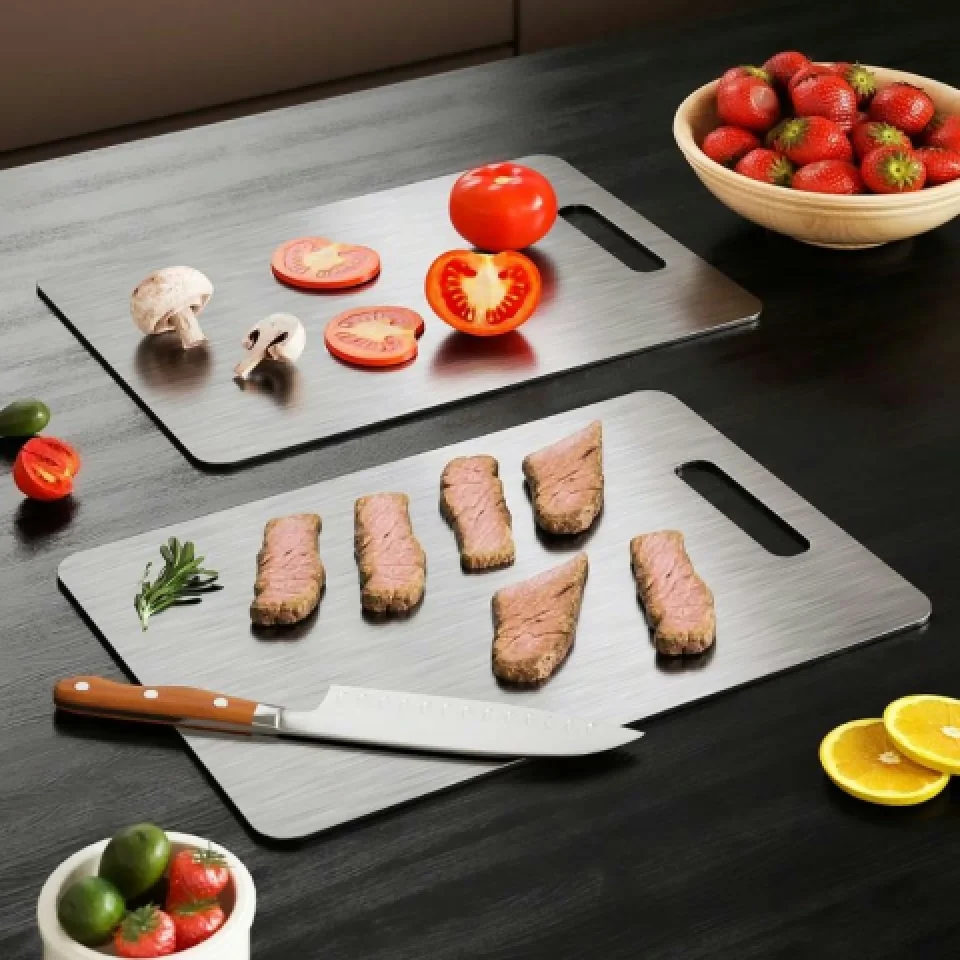
Imagine starting the morning by slicing an apple and preparing fruit for breakfast. You want a clean board that is easy to take out, comfortable to work on and simple to wash afterwards. A compact preparation surface can be useful when the task is small and you do not want to bring out a larger board.
At lunchtime, you might use it for tomatoes, cucumber, herbs or ingredients for a sandwich. The non-porous and odour-resistant features advertised for Katori are particularly relevant when your preparation tasks change throughout the day. Wash and dry the board properly between foods rather than relying on the material alone.
Dinner may involve a more demanding sequence of ingredients, from onions and peppers to vegetables for roasting. This is where a practical board earns its place in the kitchen. It should provide a stable working surface, offer enough room for your normal preparation and be easy to clean when the cooking is done.
Katori's appeal is not that it changes the way you cook overnight. It is that the product is designed around a routine you already follow, potentially making everyday preparation and cleanup more convenient without requiring an elaborate new system.
Wash the board with warm water and mild dish soap before preparing food on it. Rinse thoroughly and dry it using a clean towel or allow it to air-dry. This is consistent with the basic care instructions published on the Katori sales pages.
Set Katori on a clean, flat countertop before chopping. Check that it does not move when light pressure is applied. If additional grip is needed, use a suitable non-slip surface underneath, making sure the setup remains stable and does not interfere with safe knife handling.
Use an appropriate kitchen knife and avoid forcing the blade into the board. Give yourself enough room for both the ingredient and your guiding hand. When preparing different food categories, keep raw meat, poultry and seafood separate from ingredients that will be served without cooking.
Clean the board thoroughly with hot, soapy water after preparing each food item and before moving to another task where cross-contamination is possible. Rinse and dry it before storing. The USDA recommends this approach for cutting boards generally, regardless of the material from which they are made.
The accessible Katori pages do not provide a consistent, independently confirmed dishwasher specification for every model. Unless your exact product instructions explicitly approve dishwasher use, follow the manufacturer's hand-washing directions rather than assuming that any titanium-labelled board can be cleaned in every dishwasher cycle.
Katori's sales pages use terms such as “antibacterial” and describe the board as helping to reduce bacterial buildup. These are seller claims. A non-porous surface may be convenient to clean, but that property alone does not establish that the finished board actively kills bacteria or remains safe without washing.
Food safety still depends on how you handle ingredients. Raw poultry juices can contaminate a knife, countertop or board. The same is true when unwashed hands touch ready-to-eat food. Changing the material of one kitchen tool does not remove these pathways, so separation and proper cleaning remain essential.
Avoid presenting Katori as a board that eliminates cross-contamination. Its double-sided design can help organise preparation, but the USDA recommends separate cutting boards for raw animal products and fresh produce whenever possible. Where separate boards are unavailable, thorough cleaning between tasks is important.
A cutting surface that is easy to maintain is useful, but good food safety still depends on how you use and clean it.
The first consideration is the exact construction. Katori's sales pages describe the product as pure titanium, but the accessible product descriptions do not include an independent material certificate or laboratory analysis for the specific board being offered. Buyers who consider material composition a deciding factor should request that documentation from the seller.
The second consideration is cutting feel. A metal board will not necessarily feel or sound like a wooden board, and individual preferences vary. If you enjoy the softer sensation of cutting on wood, it is worth considering whether a titanium-based surface suits your knives and preparation style.
Third, check the product dimensions and weight. The advertised size is compact, but the reviewed pages do not establish a consistent exact weight. A buyer looking for a lightweight travel board, a heavy-duty countertop board or a specific storage fit should confirm those details before ordering.
Finally, do not assume that “heat-resistant” means the board can be used as a trivet for cookware at any temperature. The sellers advertise heat resistance, but the reviewed product information does not establish a precise temperature limit or independently verified hot-pan performance. Follow the exact manufacturer's care instructions.
If you prepare breakfast, lunch and dinner at home, a board that is easy to wash and store can make a noticeable difference to your routine. Katori's advertised non-porous surface and compact size may appeal to someone who wants a straightforward preparation tool for regular chopping and slicing.
Preparing several meals at once usually means working through multiple ingredients and cleaning kitchen tools repeatedly. Katori's smooth surface and double-sided format may be convenient for organising appropriate tasks, particularly when counter space is limited and a practical cleanup routine matters.
If onions, garlic and other strongly aromatic ingredients are part of your everyday cooking, an odour-resistant surface may be particularly appealing. Katori is marketed around this feature, although the board should still be washed properly after use rather than simply wiped and stored.
A cutting board can be a useful household gift because it fits into an activity most people already do. Katori's metal design may appeal to someone who appreciates modern kitchen accessories, especially if they prefer practical gifts over decorative items that rarely get used.
Katori may be less suitable for someone who wants a very large board, prefers the traditional cutting feel of wood or has a strict budget. It is also worth checking blade compatibility if you use specialised knives. A product makes the most sense when its practical features match your actual kitchen habits.
The Katori sales pages publish testimonials about cleaning convenience, odour resistance, knife performance and long-term appearance. These may help identify what the product is intended to deliver, but the accessible pages do not independently establish purchase verification or testing conditions for every testimonial.
When evaluating customer feedback, look for details that are useful to your buying decision. Does the reviewer mention the board's actual size, cutting feel or stability? Have they used it for several months? Do they describe how the surface looks after regular chopping and whether the product matched its advertised specifications?
Reviews about dispatch, packaging and customer support are useful too, but they answer different questions from reviews about product performance. A positive delivery experience does not establish material purity, knife friendliness or long-term durability. For those questions, detailed user evidence and independent testing would be more informative.
Shipping and refund terms should be checked for the exact website taking your payment. The accessible Australia-focused page advertises a 30-day money-back guarantee, while the US-facing page includes conflicting statements about a 30-day guarantee and a one-year trial. Those statements should not be combined into a single promise.
Before ordering, read the current terms to determine when the return period starts, whether a used board qualifies, who pays return postage and how a refund must be requested. Also confirm the delivery destination, estimated dispatch time, tracking availability and contact details for the seller responsible for the transaction.
Save your order confirmation and any written guarantee terms shown at checkout. If the offer changes or a delivery issue arises, those records will help you explain what you purchased and which conditions applied at the time.
Katori is marketed as a cutting board made from pure titanium. The accessible sales pages describe a smooth, non-porous metal surface intended for everyday kitchen use. However, the reviewed descriptions do not supply independent material testing or a specific titanium grade. Buyers who need confirmation of the exact construction should request documentation from the seller.
Katori is advertised for routine tasks such as chopping vegetables, slicing fruit and preparing other ingredients. As with any cutting board, suitability also depends on stability, adequate working space and proper hygiene. It should be cleaned after use, especially when moving between raw animal products and foods that will be eaten without further cooking.
A non-porous surface can be convenient to wash because it does not absorb liquids into the material in the same way as a porous surface. However, this does not make a cutting board automatically sterile or eliminate cross-contamination. Wash it thoroughly after appropriate preparation tasks and keep raw meat separate from ready-to-eat foods.
Katori's sellers advertise a knife-friendly surface, particularly compared with glass or stone boards. The accessible product pages do not provide independent blade-wear testing for the exact model. Knife performance depends on the blade, cutting technique and board finish, so buyers should not assume that every knife will stay sharper for longer.
Yes. Katori is advertised as a double-sided cutting board, giving you two usable preparation faces. This can help organise different ingredients, but it does not remove the need for cleaning. Raw meat juices may reach the board's edges or surrounding surfaces, so follow normal food-separation and washing practices.
The seller describes Katori's non-porous surface as resistant to absorbing moisture, strong food odours and stains. This is one of its main advertised advantages over some traditional boards. Ordinary cleaning is still necessary, and the product should not be described as incapable of retaining any surface residue under every condition.
The accessible Katori product descriptions advertise approximate dimensions of 29 × 20 cm, equivalent to about 11.4 × 7.9 inches. This is a relatively compact size that may suit everyday ingredient preparation and limited counter space. Check the exact product listing if you need a larger board or a particular storage fit.
The Katori sales pages recommend using warm water and mild dish soap, followed by drying. After preparing raw meat, poultry or seafood, follow appropriate food-safety cleaning and sanitising guidance. Do not assume the board is dishwasher-safe unless the instructions supplied with your exact model explicitly confirm that it is.
The final price depends on the regional seller, current promotion and number of boards selected. Compare the complete package total rather than looking only at the advertised price per board. Before authorising payment, check the quantity, shipping charges, taxes, optional additions and applicable return terms displayed at checkout.
The Australia-focused sales page advertises a 30-day guarantee. The US-facing reference contains inconsistent language, referring to both 30 days and a one-year trial. Buyers should verify the exact policy with the company handling their order and save a copy of the applicable terms before paying.
A useful cutting board should fit naturally into the way you cook. It should give you enough room to prepare ingredients, feel stable on the counter and be straightforward to clean when the meal is finished. Those qualities matter far more in daily use than an impressive product description that does not answer practical questions.
The Katori Titanium Cutting Board is marketed as a premium alternative for home cooks who value a non-porous surface, resistance to lingering odours, a double-sided design and low-maintenance cleaning. Its compact dimensions may make it particularly appealing in kitchens where counter space and convenient storage are important.
The most useful reason to consider Katori is not a promise that you will never need another cutting board or that it automatically eliminates bacteria. It is the possibility of a simpler everyday preparation experience using a product whose advertised features align with your kitchen routine.
Before ordering, confirm the exact material, size, care instructions, final price and applicable guarantee. If those details suit your needs, Katori may be a practical addition to your everyday kitchen setup.